
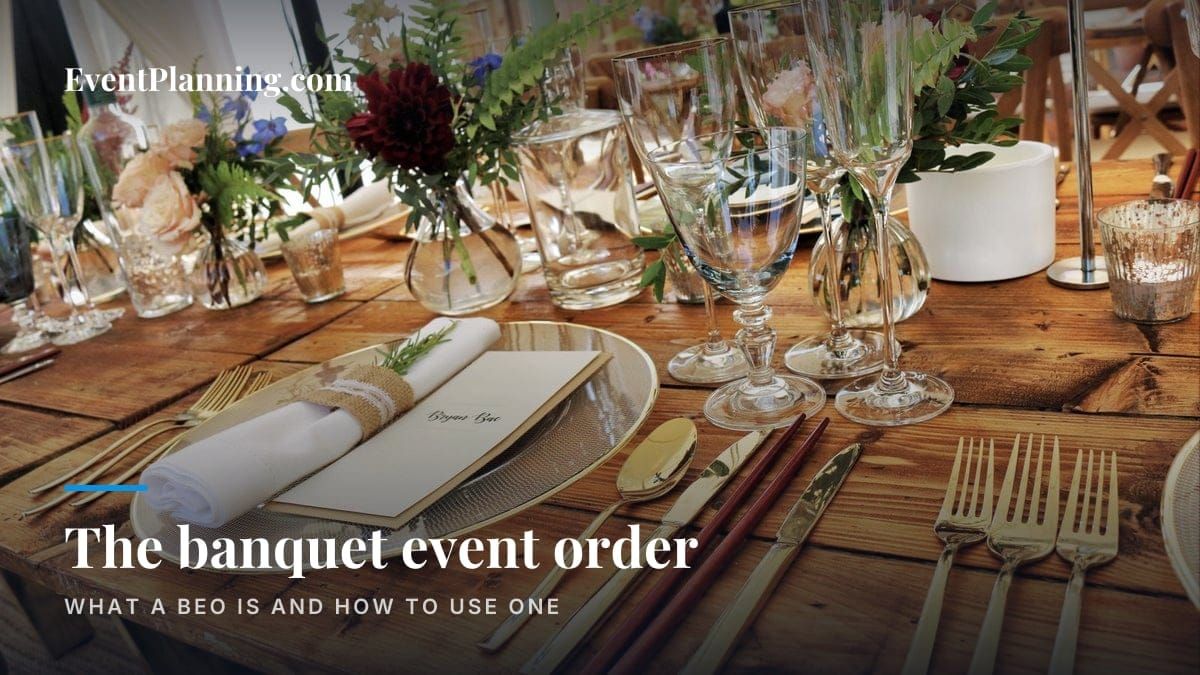
A banquet event order, or BEO, is the coordination document venues and caterers use to execute an event. It compresses everything that was discussed across months of emails into one sheet: the timeline, the room setup, the menu, the bar, the guest guarantee, and who signs off. The kitchen cooks from it, the banquet captain staffs from it, and when something on event day does not match what the client expected, the BEO is the document everyone opens first.
If you work with venues, you will live in these. Here is our free fillable template, what each section does, and the parts that catch planners off guard.
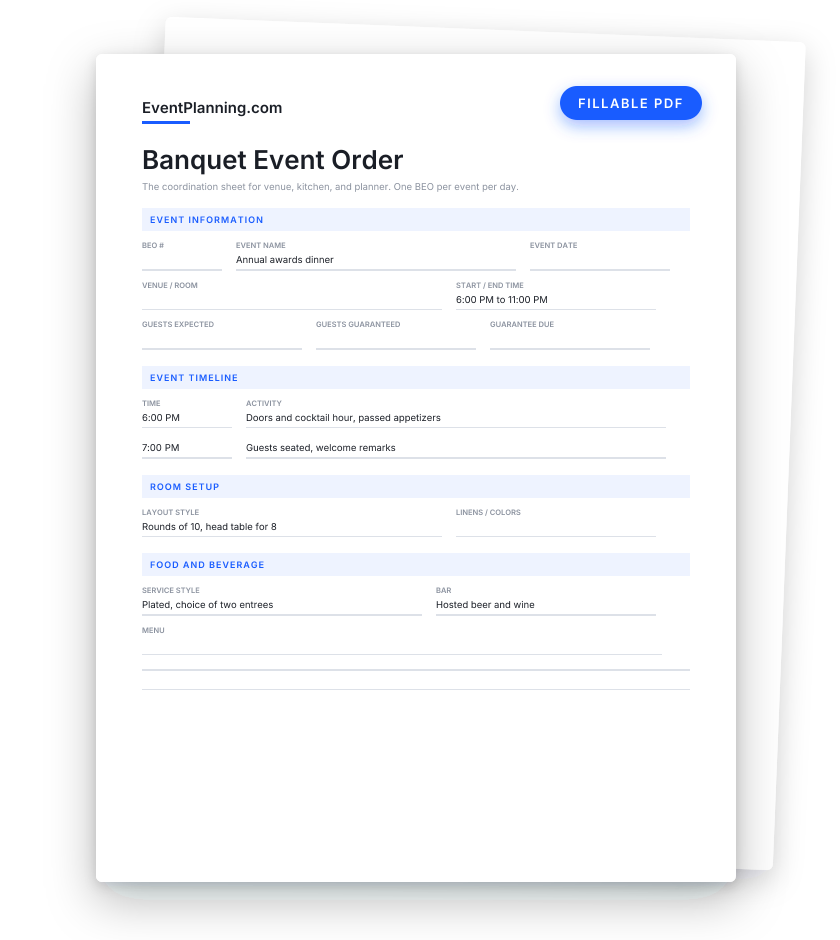
Download the free BEO template
Fillable PDF covering event info, timeline, setup, food and beverage, staffing, A/V, billing, and approvals. No email required.
Download the fillable PDFWhat a BEO contains, section by section
Event information. The basics plus the two numbers that run the money: guests expected and guests guaranteed. The guarantee is the count you pay for whether they show or not, and it usually locks 48 to 72 hours before the event. Missing that deadline means the venue picks the number for you.
Timeline. The venue's version of the schedule: doors, service start, bar close, teardown. It should agree with your run of show to the minute; when the two documents disagree, event day inherits the argument.
Room setup. Layout style, table counts, linens, stage and dance floor. Specific beats vague: "rounds of 10, head table for 8" gets set correctly; "banquet style" gets interpreted.
Food and beverage. Service style, the menu itself, and the bar arrangement, including who pays for what. Hosted bar versus cash bar versus hosted-beer-and-wine is a budget line worth hundreds or thousands; it gets written here, not remembered.
Staffing, A/V, and special instructions. Server counts, mics and screens, and the section that earns its keep: dietary restrictions, allergies, VIP notes, vendor meals, and delivery windows. Anything only said out loud does not exist.
Billing and approvals. Deposit paid, estimated total, payment terms, and signatures from both sides. A signed BEO is the operational contract for the event; changes after signing require a revised BEO, reviewed and signed again.
How planners work with BEOs
When the venue drafts the BEO, your job is verification: read every line against your notes and your client's expectations before signing, because the kitchen will execute what is written, not what was discussed. Catch the wrong service time or the missing vegetarian count on paper, where fixing it costs nothing.
When you are the one running coordination, drafting the BEO yourself and walking the venue through it flips the dynamic: your document becomes the source of truth. That is what this template is for. Bring it to the final venue walkthrough, confirm every section, and get both signatures. Our guide to choosing a venue on a budget covers the questions that feed this sheet.
Get the editable Word version
Same structure, fully editable for your branding and repeat events. Enter your email and the download unlocks.
We will also send you our free 4-day planning mini course. Unsubscribe anytime.
BEO FAQ
What does BEO stand for?
Banquet event order. It is the standard coordination document between a venue or caterer and the client or planner, covering timeline, setup, menu, staffing, and billing for a single event.
Who prepares the BEO?
Usually the venue or catering company drafts it and sends it for approval. Independent planners often draft their own to control the details, then reconcile it with the venue's version before both sides sign.
When is the guest guarantee due?
Most venues lock the guaranteed count 48 to 72 hours before the event. You pay for the guarantee even if fewer guests show, and increases after the deadline are subject to what the kitchen can do.
Is a BEO a contract?
A signed BEO functions as the operational agreement for the event and usually supplements the venue contract rather than replacing it. The venue contract covers the legal terms; the BEO covers exactly what gets delivered on the day.
Pairs well with: the free run of show template for running the day itself, and the event contract template for your client agreement. The full planning process behind all three is taught in the $47 course, 49 templates included.